Energy Revolution System Review: What Buyers Should Know?
The Energy Revolution System is sold as a digital do-it-yourself energy blueprint: instructions and diagrams for a project, not a finished generator that arrives in a box. This review looks at what that means for a buyer, which claims can be judged from the outside, and what you should confirm before paying.
Short verdict
It can make sense as reading material for a hobbyist who understands the risks and treats the build as an experiment. It looks like a poor fit for anyone hoping to cut an electricity bill or power a home, because independent output measurements have not been established in the evidence available for this review. We did not buy or build it, so this verdict rests on the offer and general engineering principles, not on firsthand results.
Disclosure: This is an independent editorial site, not the seller and not a product-testing lab. The button above is an affiliate link, so we may earn a commission if you buy, at no extra cost to you. See the full disclaimer.
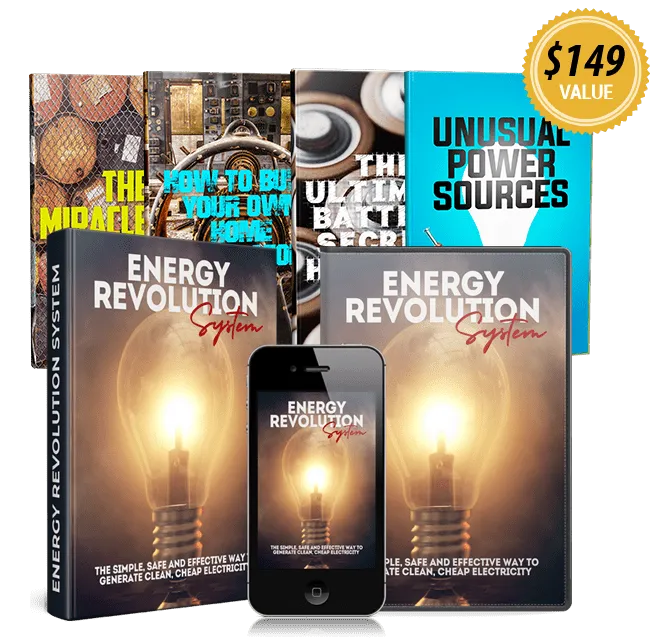
Energy Revolution System At A Glance
Before the detail, here is the offer reduced to what a buyer can act on. The right-hand column separates what the seller advertises from what you must confirm yourself.
| Question | Where it stands |
|---|---|
| Product type | Digital blueprint and instructions for a DIY project, as marketed. As marketed, you source the parts and build the device yourself. |
| Price | Set by the seller and subject to change, so no figure is quoted here. |
| Refund terms | Defined by the seller. The window and request process are what matter most. |
| Published test data | Not established in the evidence available for this review. |
| Best suited to | Curious hobbyists who want to study a coil-based design and accept the risks. |
| Poor fit for | Buyers expecting lower bills, backup power or a plug-in home solution. |
What The Energy Revolution System Is, And What It Is Not?
The listing presents the Energy Revolution System as an instructional guide for building a small-scale energy device inspired by Nikola Tesla's coil work, specifically a bifilar-coil layout. That framing matters because it sets the whole value test. You are paying for information, so the question is whether the information is clear, complete and technically sound, not whether a gadget performs.
What it is
- A downloadable guide with explanations and diagrams, according to the seller's description.
- A project you would assemble yourself from parts you source.
- Educational material about coils and electromagnetic ideas.
What it is not
- A ready-made generator, battery or solar kit, as marketed.
- A professionally installed home-energy system.
- A product with independently published output figures, as far as this review could establish.
If you want a broader introduction first, the Energy Revolution System homepage gives the general overview. This page stays narrower and asks whether the offer is worth buying.
Concept Versus Validated Performance
A guide can be perfectly readable and still describe something that does not deliver what its marketing implies. Those are two separate questions, and only the first can be judged from a sales page.
Electromagnetic induction is real physics. Moving a magnet near a coil induces a voltage, and that principle underlies every conventional generator. The catch is that practical generators convert energy supplied from somewhere else, such as a turbine, an engine or a hand crank. Magnets alone do not create unlimited continuous power, so any design should be able to say clearly where its energy comes from.
The table below turns common marketing-style claims into the evidence you would reasonably want before believing them.
| Type of claim | What would settle it |
|---|---|
| Electrical output | Measured voltage, current and runtime under a stated load, recorded with calibrated instruments. |
| Self-sustaining or "free" energy | A full energy balance showing input power versus output power, ideally repeated by someone independent. |
| Electricity savings | Before-and-after utility meter readings from a real installation, not a calculation. |
| Safe to use at home | Compliance with recognized electrical safety standards, which a blueprint alone does not establish. |
| Complete, buildable plans | A sample page or accounts from people who finished a build and describe the gaps. |
This review has no evidence of that kind to draw on. That is its central limit, and it is why we describe the concept rather than endorse results.
What To Check In The Current Package?
We cannot confirm the exact contents, so treat this as a shopping list of questions rather than a statement of what you will receive. The order page should answer most of them.
- Format and access: PDF, video or both; how it is downloaded; whether access expires. A file you can keep offline is worth more than a members-area login that could disappear.
- Diagrams and specifications: schematics, wire gauge, turn counts, capacitor and power-source values, and whether parts come from ordinary electronics suppliers. A parts list with exact values is the clearest sign a blueprint is buildable.
- Safety information: whether high-voltage hazards, insulation and safe test procedures are explained or skipped. Skipped is a red flag.
- Extras: bonus material counts only if the order page itself lists it.
- Support: a named contact route, and whether it covers download problems, build questions or both.
- Updates: whether corrected or revised versions are promised, and for how long.
Screenshot the price and policy text on the day you buy. If anything changes later, you will have a record of what was offered.
Learn more about the technical details in our Energy Revolution System Blueprints guide.
See what the current package actually lists
The seller's page is the only place the live package, price and policies are stated. Use the list above to read it critically.
Affiliate link. Terms, price and contents are set by the seller and may change.
Purchasing Considerations: Pros And Cons
These are weighed from the nature of the offer, not from anyone's build results.
In its favor
- A digital product does not require physical shipping; access and delivery timing depend on the seller's terms.
- It can serve as an introduction to coil concepts for people who like hands-on electronics.
- The cost of information is limited compared with buying finished equipment, assuming the price is modest when you check it.
- Marketing it as a blueprint, rather than a finished generator, is an accurate description of what is being sold.
Against it
- Independent output and efficiency measurements have not been established by the evidence available for this review.
- The build costs parts, tools and time on top of the purchase price.
- High-voltage coil experiments carry shock and fire hazards.
- Refund handling, support and package contents all depend on the seller.
- It is not a substitute for a real backup power or solar solution.
Cost And Total Ownership
The listed price is only the first part of the cost, and we deliberately do not quote one here. Prices, discounts and add-ons are controlled by the seller and can change without notice, so any figure printed on this page could be wrong by the time you read it.
It helps to think in three layers:
- The guide itself. Whatever the seller currently charges, plus any optional extras you choose.
- Parts and tools. Wire, a core or frame, capacitors, a power source, a multimeter and basic hand tools. The bill depends on the design and what you already own, and we cannot responsibly estimate it without the full instructions. Budget a cushion for parts you may need to replace.
- Your time and risk. Hours of building and testing, plus the care that high-voltage work demands. Replacing a damaged component or a failed attempt adds to the total.
A fair test: would the combined outlay still feel acceptable as a hobby expense if the finished project produced nothing useful? If yes, the downside is limited. If you are counting on lower bills to repay it, that return is unproven.
Energy Revolution System Reviews And Complaints
We are not reproducing customer quotes, star scores or complaint summaries here, because we cannot confirm that any of them came from verified buyers. Unattributed opinions would be worse than none.
When you read other energy revolution system reviews, a few habits make the difference between useful and unreliable sources:
- Look for specifics. A credible account says what was built, which parts were used and what was measured. Vague enthusiasm tells you nothing.
- Look for disclosure. Many review sites, including this one, earn affiliate commissions. A reviewer who never names a drawback deserves extra doubt.
- Watch for repeated wording. Near-identical testimonials across different sites often come from the same marketing template.
- Read complaints for patterns. Repeated, specific problems with delivery, access or refunds mean more than one angry post. Competitor-driven complaints exist too, so look for details that can be cross-checked.
- Be wary of dramatic results. Claims of free power, large savings or "beating the grid" need measurement data to be credible.
Electronics hobbyist forums are a better place to test the concept than a review site, and posts that describe a method are worth more than posts that describe excitement.
Is The Energy Revolution System Legitimate?
"Legitimate" can mean two things, and it is worth keeping them apart. The first is whether the seller operates a real business with clear terms. The second is whether the technical claims hold up. A page can be honest about the first and still overreach on the second.
On transparency, look for a named seller, working support contact, readable refund terms and a checkout that runs through a recognized payment processor. On technical quality, ask whether the claims come with measurements and whether they respect energy conservation. Where a design promises more usable energy than is put in, skepticism is the sensible default.
This review does not vouch for the seller's identity, the author's credentials or the policies, and you should not treat our silence on them as approval. Keep your own records of what you were promised.
For a closer look at the product's credibility, seller transparency, and technical claims, read our Is Energy Revolution System Legit? guide.
Who Is The Energy Revolution System For?
May suit
- Hobbyists who enjoy building and experimenting with coils.
- Learners who want a structured project to study electromagnetic ideas.
- Buyers who accept that the outcome is uncertain and treat the purchase as a low-stakes experiment.
Should not expect
- Established reductions in a household electricity bill.
- Dependable emergency or whole-home power.
- A project that is safe for beginners to build unsupervised.
- A guaranteed refund outcome without reading the seller's terms.
Anyone considering wiring a homemade device into a house should stop and speak to a licensed electrician first. Nothing on this page is guidance for connecting equipment to mains power.
Final Purchase Checklist
- Confirm the current price and any add-ons.
- Find the refund window and the exact steps to request one.
- Confirm the delivery format and how long access lasts.
- Decide how much you would spend on parts and tools, and whether you would still be comfortable if the project achieved nothing.
- Make sure you have the skills and workspace for high-voltage work, or a knowledgeable person to help.
- Save screenshots of the offer and policies on the day you purchase.
Conclusion
The Energy Revolution System is best treated as a DIY learning project rather than an energy solution. The offer is easy to describe, but independent data supporting its performance claims was not available for this review, and physics limits what any coil arrangement can deliver without an energy input. If you are comfortable with that and the terms read fairly, it is a reasonable hobby purchase. If lower power bills or backup power is the goal, established equipment is the safer route. For the general overview, return to the Energy Revolution System homepage.
Ready to see the live offer?
The current price, contents and refund policy are shown there. If they match what you want, you can decide with the facts in front of you.
Affiliate link. We earn a commission on qualifying purchases at no extra cost to you.
Energy Revolution System Review: Frequently Asked Questions
No. We did not buy, build or test the blueprint, and this page does not present any customer results. It evaluates how the offer is marketed, what a buyer can reasonably verify, and where claims would need independent evidence. Treat it as a purchase-decision guide rather than a build report.
The evidence available for this review does not establish that it reduces household electricity costs, so it is unwise to buy on that expectation. A savings claim would need metered before-and-after data from a real installation. Until then, treat the guide as DIY learning material.
Prefer accounts that describe what the reviewer actually built, with measurements, photos of the work and honest limits. Be cautious about anonymous praise, identical wording, affiliate-driven posts that never mention drawbacks, and complaint threads that cannot be traced to a real order. Refund and access problems are worth reading closely.
Open the seller's current order page and read the price, any add-ons and the refund terms there, because offers can change and we do not list a price here. Then budget separately for the parts, tools and workspace a DIY build would need, since the guide's price covers information rather than hardware.
Anything involving coils, capacitors or high voltage carries real shock and fire risk, so prior electronics experience matters more than enthusiasm. If you are new, treat the purchase as reading material first. Never connect an experimental device to household wiring, and consult a licensed electrician about anything near your mains supply.
Check the seller's order page and the payment processor's terms shown at checkout, and save a copy of the policy as it reads on the day you buy. Look for the refund window, how to request one, and how to reach support. Do not rely on a third-party summary, including this one.